The Best Decaf Coffee Actually Tastes Great

There is a moment most coffee drinkers know well. It is late afternoon or after dinner, the house is finally quiet, and you want a cup in your hands. But you also want to sleep tonight. For years, the answer felt like a compromise: reach for decaf and accept that it would taste flat, hollow, or vaguely burnt.
That trade-off is real, but it is not necessary. The best decaf coffee actually tastes great, close enough to its caffeinated counterpart that most people cannot tell the difference in a blind cup. The reason so much decaf disappoints has nothing to do with the idea of decaf and everything to do with how it was made.
Why decaf earned its bad reputation
Most of the decaf people grew up with started at a disadvantage. Roasters often reserved their lower-grade, less flavorful beans for decaffeination, figuring the process would mask the difference anyway. Then those beans were decaffeinated harshly and roasted dark to cover up whatever was left. The result was exactly what you would expect: a cup that tasted like an afterthought.
So the reputation is understandable. It just says more about the choices behind the cup than about decaf itself.
What actually makes decaf taste great
Great decaf is not a trick. It comes from doing the same careful work you would do for any coffee worth drinking, at every step.
- It starts with good coffee. You cannot decaffeinate your way to quality. The best decaf begins as specialty-grade coffee grown with care, the same beans a roaster would be proud to sell with the caffeine still in them.
- The caffeine is removed gently. Modern decaffeination methods take out nearly all the caffeine while protecting the compounds that carry flavor and aroma. Done well, the coffee keeps its character. Done poorly, it strips the cup bare.
- It is roasted with intention. Decaffeinated beans behave differently in the roaster, so they need a roast profile built for them, not a heavy char meant to hide flaws. Careful roasting is what lets the sweetness and body come through.
When all three line up, decaf stops being a consolation prize. It becomes a cup you actually look forward to.
The decaf we are proud to pour
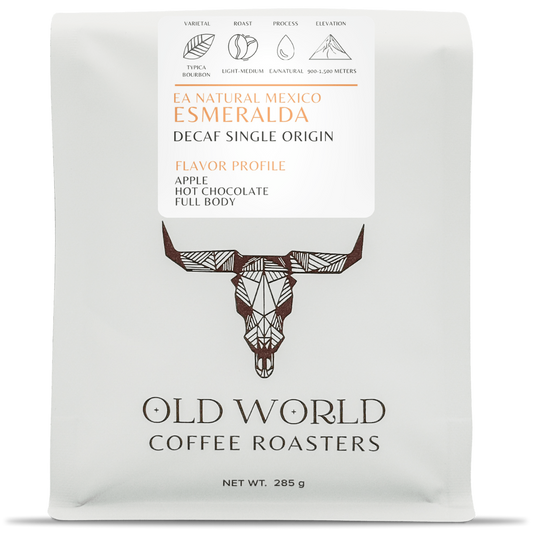
Grown in the mountain air of Oaxaca by smallholder farmers, our Esmeralda Decaf offers more than just a caffeine-free cup. With notes of apple and hot chocolate, this light-medium roast is your daily permission to slow down, sip deeply, and take a moment that is entirely yours. It is grown between 900 and 1,500 meters above sea level, and treated like the specialty coffee it is, from the farm forward.
That is the whole point. We did not go looking for a decaf to fill a gap on the menu. We went looking for a coffee we would want to drink ourselves, and made sure the caffeine was the only thing missing.
How to get the most out of your decaf
Brew decaf the way you would brew any good coffee. Use fresh beans, grind just before brewing, and measure your coffee and water rather than eyeballing it. Decaffeinated beans can be a little more brittle, so a slightly coarser grind and a gentle pour help you avoid a muddy cup. Everything else is the same rhythm you already know.
The best part is what it gives back. A great decaf means the evening cup is back on the table. The one after dinner while the kids finish homework, the one on a slow Sunday night, the one that has nothing to do with needing energy and everything to do with wanting the ritual. That small pause belongs to you at any hour.
Slow Down, Drink Up.